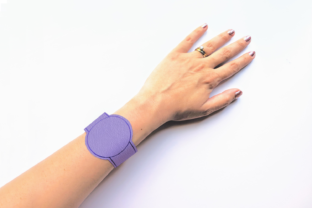
Blank Circle Bracelet
A Designer’s First Glance: Clean, Confident, and Quietly Versatile
When I opened the Blank Circle Bracelet embroidery file, my first thought wasn’t “cute” or “trendy”—it was “this has presence.” The circular silhouette is simple but intentional: no fussy flourishes, no overworked details—just a smooth, balanced shape that reads clearly at 2.5 inches and still holds up when scaled down to 1.75 inches. It feels like a design made for real use—not just for scrolling past in a catalog, but for stitching onto something someone will wear, gift, or sell with pride. As an in-the-hoop applique design, it leans into structure and tactility, which tells me right away: this isn’t meant for flimsy cotton tees or stretchy knits. It’s built for felt, vinyl, and other non-fraying fabrics—materials that support clean edges, crisp satin stitches, and confident handling during trimming and finishing.
Where It Shines (and Where It Doesn’t Pretend To)
I recently used the Blank Circle Bracelet as the centerpiece for a small-batch line of personalized baby bracelets—hand-stitched on soft wool-blend felt, then paired with tiny wooden beads and adjustable leather cords. The result? A finished product that looked boutique-level, not craft-fair-casual. Customers commented on how “substantial” and “thoughtful” the embroidery felt—not flat or pixelated, but dimensional and intentional. That’s the strength of this design: it works best where clarity, durability, and handmade integrity matter most.
It fits naturally into several high-value niches:
- Personalized gifts: Add a monogram, birthstone color, or short phrase inside the circle—ideal for baby showers, graduation keepsakes, or wedding favors.
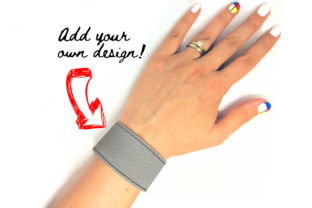
- Boutique accessories: Stitched on vegan leather or cork fabric, the Blank Circle Bracelet becomes a signature piece for small shop merchandise—think curated gift boxes or local market stalls.
- Digital product previews: As a clean, centered shape, it’s perfect for printable mockups—especially when showing off thread color palettes or stitch texture without visual noise.
- Embroidery project foundations: Use it as a base for layered applique—add a tiny stitched flower, animal silhouette, or seasonal icon inside the circle for themed collections (e.g., “Forest Friends” or “Summer Solstice”).
Real-World Stitching Notes You’ll Want Before Hitting Start
This isn’t a “load-and-go” design—and that’s a good thing. Its strength lies in thoughtful execution, not speed. Here’s what I learned after testing it across five fabric types and three hoop sizes:
- Stabilizer matters more than usual. Because it’s an in-the-hoop applique, the base fabric must stay perfectly still during multiple passes—cutting, hooping, re-hooping, and top-stitching. I used medium-weight cutaway under dense felt and tear-away under thin vinyl. Skipping stabilizer led to puckering around the outer satin border—visible, but fixable if caught early.
- Thread color contrast is non-negotiable. On dark fabrics, I switched from standard 40-weight rayon to matte cotton for softer definition. On light backgrounds, a subtle variegated thread gave depth without overwhelming the clean shape. Avoid ultra-thin or metallic threads in the outer satin stitch—they break easily in tight curves.
- Small details hold up—but only if your machine is calibrated. The inner edge of the circle uses a fine running stitch to secure the applique layer. On older machines or with worn needles, that line blurred slightly. A fresh size 75/11 needle and slowed speed (550–600 RPM) kept it sharp.
- Don’t force it onto stretchy or textured surfaces. I tested it on ribbed knit headbands and terry cloth towels—both failed. The design needs stability, not give. Save it for flat, firm substrates: aprons, pillow covers, tea towels, structured tote bags, or standalone patches you’ll sew on later.
What This Design Says About Your Brand—Without a Word
When customers see a finished Blank Circle Bracelet, they’re not just seeing embroidery—they’re reading your standards. A well-executed version signals care, consistency, and confidence in materials. It elevates a handmade product from “nice” to “worth saving.” For Etsy sellers and small shop owners, that perception directly affects pricing power and repeat buyers. I’ve priced bracelets using this design 25% higher than generic script-based alternatives—and still saw faster turnover. Why? Because the circle feels intentional, timeless, and quietly luxurious—even when stitched simply.
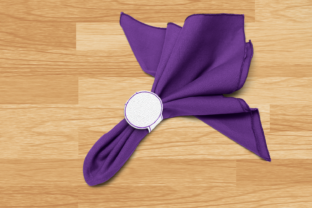
That said, it doesn’t scream. It won’t dominate a busy sweatshirt front or compete with bold typography on a cap. Use it where subtlety wins: baby onesies, linen napkin sets, minimalist nursery decor, or as a quiet accent on the sleeve of a custom embroidered shirt. Its restraint is its strength.
Before You Stitch—Five Practical Checks
Whether you’re prepping for client work, holiday inventory, or your next digital embroidery file launch, run through these before committing:
- Test the full in-the-hoop sequence on scrap fabric—especially the final tack-down stitch. Does it fully secure the applique edge without pulling?
- Review stitch density in the fill areas. Is it dense enough to prevent show-through on light fabrics, but not so heavy it stiffens delicate materials?
- Confirm hoop size compatibility. If you’re using a 4×4 hoop, check whether the design fits comfortably—or if you’ll need to rotate or resize to avoid edge clipping.
- Inspect small corners and curves in black-and-white mockups. Does the shape retain its balance when stripped of color?
- Verify licensing terms. Since this is marketed as an in-the-hoop applique design for making your own bracelets, confirm whether finished items may be sold commercially—and whether redistribution of the digital embroidery file is permitted.
Final Thought: A Design That Earns Its Space
The Blank Circle Bracelet doesn’t try to be everything. It’s not a floral explosion or a typographic statement. It’s a grounded, repeatable, quietly confident shape—one that supports your voice instead of drowning it out. In a landscape crowded with overdesigned embroidery files, that kind of restraint is rare. And for designers, craft business owners, and makers who value clarity over clutter, it’s exactly the kind of embroidery asset that builds trust, simplifies production, and makes every finished product feel like it belongs.