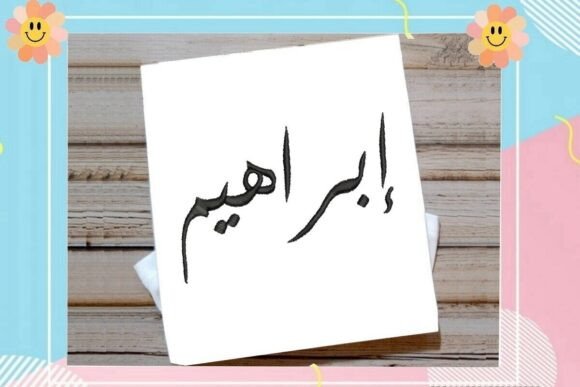
Ibrahim Arabic Name
First Impression: Elegant, Personal, and Quietly Confident
As an embroidery designer who’s set up 47 craft fair booths over the past decade, my first reaction to Ibrahim Arabic Name is immediate: this isn’t a loud, trend-chasing design—it’s a quiet statement of dignity and craftsmanship. The title alone signals intentionality. “Elegant” and “clean Arabic lettering” in the description tell me this is designed for clarity, not clutter. It lands somewhere between modern minimalism and timeless tradition—neither overly ornate nor stripped-down to abstraction. That balance is gold for handmade markets, where shoppers pause longest for pieces that feel both personal and polished.
Where It Shines: Craft Fair Product Placement That Converts
In a booth full of color-splashed tote bags and playful patches, Ibrahim Arabic Name stands out by *not* shouting. It draws attention through contrast: refined line work against textured tea towels, subtle presence on a structured cap brim, or delicate focal point on a linen pillow cover. Here’s how it performs across top-selling categories:
- Tote bag design: Works beautifully centered on the lower third of a natural canvas tote—elegant without competing with bold graphics. Customers associate clean Arabic script with authenticity and care.
- Apron embroidery: Ideal above the pocket or along the waistband. Its vertical rhythm complements the apron’s shape and reads clearly even from three feet away.
- Tea towel embroidery: A standout on unbleached or oatmeal linen. The “clean lettering” holds up against kitchen towel texture better than dense florals—and feels elevated next to standard monograms.
- Embroidered patch: Highly effective as a sew-on or iron-on accent on denim jackets or backpacks. Its legibility at 3–4 inches makes it far more versatile than cursive English names.
- Fabric pouch & small shop product: Perfect scale for zippered cotton pouches (think gift-ready stationery sets or baby essentials). Adds perceived value instantly—handmade + culturally meaningful = higher price tolerance.
What Makes It Sell Online and In-Person
Ibrahim Arabic Name has strong cross-platform appeal. For the Etsy seller, it photographs exceptionally well: high-contrast thread on light fabric creates crisp, scroll-stopping thumbnails. As a digital embroidery file, it’s inherently reusable—no seasonal expiration. Buyers return for personalized versions (Sami, Layla, Omar), making it a reliable anchor in your design assets library. And because it’s categorized under Boys Girls, it avoids gendered assumptions while resonating across age groups—from baby onesies to teen caps to adult market bags.
Production Reality Check: What You Must Test Before Booth Day
This isn’t a “load-and-go” machine embroidery design. Its elegance depends on execution. Before cutting into your best linen or hooping your first cap, do these five things:
- Test on scrap fabric that matches your final product—especially if using textured towels or thick twill. Arabic script relies on consistent stroke weight; uneven tension shows fast.
- Check thread contrast carefully. Light gold on ivory? Gorgeous—but only if your thread batch is colorfast and your machine stitches evenly. Dark navy on charcoal? Risky. When in doubt, go high-contrast (black on ecru, white on navy).
- Review spacing and stitch density. “Clean lettering” means no overlapping strokes or cramped diacritics. Zoom in on your embroidery file preview—if dots or short marks look fused at 100%, they’ll vanish on dark fabric or curved surfaces like caps.
- Confirm hoop size and stabilizer match. This design likely needs medium-weight cutaway stabilizer for woven fabrics and tear-away for stable knits. Avoid lightweight fusibles—they won’t support fine Arabic curves.
- Create at least one real mockup—not just a printable mockup. Drape that embroidered tea towel over a ceramic mug. Pin the patch to a denim sample. See how light hits the stitches in afternoon booth lighting.
Careful-Use Notes Every Embroidery Business Owner Should Know
Ibrahim Arabic Name excels when treated with respect—not rushed. Avoid scaling it below 2.5 inches wide: tiny dots and connecting strokes blur on dense fabrics or low-thread-count cotton. On dark fabric, double-check that satin stitches fully cover the underlay—Arabic letterforms lose meaning if outlines bleed or fill gaps appear. Curved surfaces (caps, pouches) demand precise digitizing—don’t assume your base file handles compound curves smoothly. And never skip comparing fabric colors side-by-side: oatmeal linen vs. natural canvas may seem identical online but shift the entire mood of the finished product.
Why It Strengthens Your Brand and Booth Presence
In a sea of generic “Mom Life” and “Coffee First” designs, Ibrahim Arabic Name quietly signals depth, cultural awareness, and design discipline. It elevates your handmade product beyond decoration into storytelling. Customers don’t just buy a name—they buy intention, heritage, and visual calm. That translates directly to booth dwell time, Instagram saves, and repeat Etsy orders. It also supports brand consistency: whether you’re selling embroidered patches or custom tea towel sets, Ibrahim Arabic Name carries the same refined voice across formats. Paired with neutral packaging and thoughtful display (e.g., a folded towel with the name visible beside a matching pouch), it becomes a silent sales ambassador.
Final Designer Note: Licensing and Longevity
The description states it’s a “high-quality hand-embroidered pattern”—but before listing Ibrahim Arabic Name as a commercial embroidery offering, verify licensing terms. If you’re sourcing the embroidery file from a third party, confirm it permits resale of finished products—not just personal use. If you’re digitizing it yourself, ensure your Arabic font source allows commercial adaptation. Clarity here protects your small shop product line and keeps your craft fair income sustainable season after season.