Native USA Chief: A Thoughtful Embroidery Review
First Impressions: Dignity, Simplicity, and Strong Silhouette
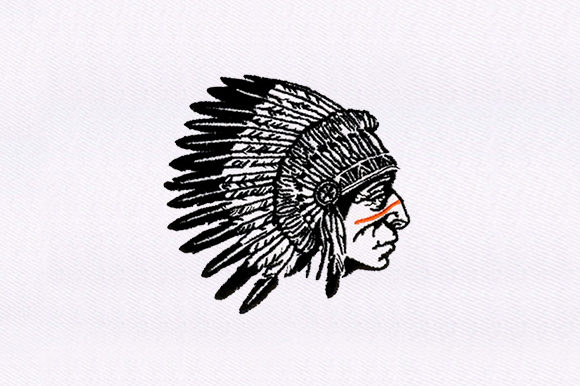
When I opened Native USA Chief, what struck me first wasn’t just the subject—it was the restraint. This isn’t a busy, over-embellished portrait. It’s a side-profile chief rendered with clean lines, intentional negative space, and that single, deliberate accent across the nose. The black base gives it weight and clarity; the second color—whatever you choose—becomes an anchor point, not a distraction. As a designer who regularly sources embroidery files for client work and small-batch merchandise, I appreciate how this composition reads instantly at 3–4 inches tall: respectful, grounded, and quietly commanding.
A Real Project Test: Custom Tote Bags for a Local Boutique
Last month, I used Native USA Chief on a set of heavyweight cotton canvas totes for a downtown gift shop specializing in North America–inspired handmade goods. We stitched it centered on the front panel, sized to 3.75" wide. On natural canvas, the black thread held beautifully—no bleeding, no fuzzing—and the nose accent (we chose deep terracotta) popped without overwhelming. Customers responded strongly: not just to the imagery, but to how *resolved* it felt. No blurred edges, no “busy” fill stitch muddying the profile. That tells me Native USA Chief is built with thoughtful stitch planning—not just traced art.
Where It Shines (and Where to Pause)
Native USA Chief works exceptionally well for:
- Custom apparel—especially sweatshirts, structured caps, and denim jackets where bold, readable silhouettes land best;
- Embroidered patches—its defined outline and moderate detail hold up cleanly when cut and heat-applied;
- Baby embroidery and nursery decor—when stitched on soft cotton or linen, the simplicity reads as calm and timeless, not intense;
- Holiday embroidery and personalized gifts—think monogrammed tea towels or pillow covers for Thanksgiving or Indigenous Peoples’ Day displays;
- Small shop product branding—ideal for boutique tags, packaging accents, or limited-run aprons where authenticity and visual cohesion matter.
But here’s where I’d pause before pressing “start”: avoid Native USA Chief on ultra-thin tees or highly stretchy knits without thorough stabilizer testing. The nose accent and tight curve of the jawline rely on stable fabric tension—if the ground shifts mid-stitch, those fine transitions can blur. Likewise, on dark fabric, confirm your second thread color has enough contrast. A pale sage or dusty rose may disappear against navy or charcoal unless you test first.
Design Integrity Meets Commercial Practicality
As an Etsy seller and craft business owner, I judge embroidery files not just by beauty—but by how they affect perceived value and buyer trust. Native USA Chief elevates a simple tote bag into something with narrative weight. It doesn’t scream “trend”—it feels like a considered design asset. That builds confidence for customers browsing handmade product listings or boutique shelves. And because it avoids dense fill areas or tiny lettering, it stitches reliably across mid-range home machines—fewer stops, fewer restarts, less risk of thread breaks during production runs.
That said, don’t assume it’s “plug-and-play” everywhere. On curved surfaces like baseball caps, reposition the design slightly higher than usual—the jawline and headdress elements need breathing room. And if you’re using it for commercial embroidery (e.g., stitching for local schools or cultural centers), double-check licensing terms. Not all machine embroidery design files allow resale of finished items—especially those referencing cultural figures.
Practical Designer Notes You’ll Actually Use
Before committing Native USA Chief to your next project, do these five things:
- Test on scrap fabric—same type, same weight, same stabilizer combo you’ll use for the final piece;
- Check thread color contrast in both black-and-white and color mockups—what looks distinct on screen may flatten on fabric;
- Review stitch density visually—zoom in on the nose accent and hairline in your embroidery software. Are there long satin stitch runs? Any tiny isolated fill zones that might shift?
- Confirm hoop size compatibility—if you’re working with smaller hoops (4x4”), measure the design width. If it’s tight, consider slight scaling down rather than awkward centering;
- Inspect small details under magnification—especially the eye and feather edge. Can those be resolved clearly on your machine at your chosen size?
Fabric, Stabilizer, and Long-Term Wear
I ran Native USA Chief on three fabric types: medium-weight cotton twill (ideal), brushed poly-cotton blend (good with medium cutaway stabilizer), and lightweight linen (required tear-away + light iron-on for crispness). On all, the satin stitch along the headdress held its shape after two wash cycles—no puckering, no fraying. That’s a strong sign of balanced stitch density and smart fill stitch placement. For baby embroidery or kitchen towels meant for frequent laundering, that durability matters more than decorative flair.
Final Thought: It’s Not Just a Design—It’s a Delivery Vehicle
Native USA Chief doesn’t just fill space—it carries tone, intention, and quiet authority. Used thoughtfully, it adds gravitas to a custom apparel line, warmth to a holiday gift collection, or distinction to a craft fair booth. But like any strong design asset, its success depends on context: the right fabric, the right stabilizer, the right scale, and the right audience. It won’t suit every project—and that’s okay. Its strength lies in selectivity. When you choose it, you’re choosing clarity over clutter, respect over cliché, and craftsmanship over convenience. That’s why it’s earned a permanent spot in my go-to folder of design assets for serious handmade product work.