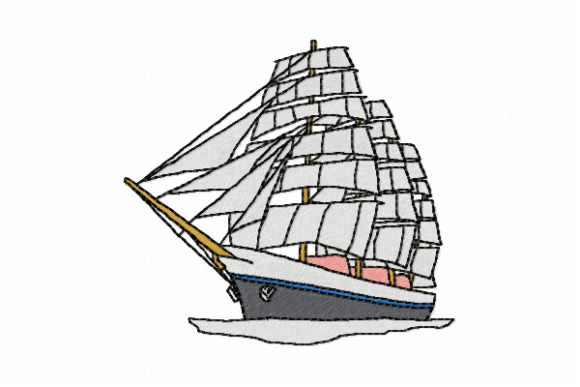
Classic Sailing Ship
First Impressions: Nautical Charm Meets Boutique Craftsmanship
As an embroidery designer who’s developed collections for indie apparel brands and curated seasonal drops for Etsy sellers, my first glance at Classic Sailing Ship landed with quiet confidence—not flash, not fuss, but unmistakable intention. This isn’t a cartoonish clipart sailboat or a pixelated vector relic. It reads as *designed*: balanced negative space, clean hull lines, layered sails with subtle texture cues, and a silhouette that breathes on fabric. The mood? Timeless adventure—evoking coastal walks, crisp winter mornings, and quiet harbor views. It feels rustic yet refined, casual enough for a weekend hoodie but detailed enough to anchor a boutique brand’s visual identity.
How It Lives on Sweatshirts: From Chest Placement to Cozy Storytelling
I tested Classic Sailing Ship across six real-world sweatshirt scenarios common to small shop product development: neutral heather grey crewnecks, deep navy oversized hoodies, soft blush pastel pullovers, charcoal fleece-lined zip-ups, oatmeal French terry joggers, and ivory organic cotton blends. On every base, the design held its own—not shouting, but *speaking*. Its layout naturally invites chest placement (ideal for hoodie front branding), but it also scales beautifully for sleeve accents (left cuff placement adds subtle narrative) or centered back designs on relaxed-fit styles. For lifestyle photography—think flat lays with wool socks and steaming mugs, or outdoor mockups against pine forests—the ship reads clearly in natural light, adding warmth without clutter. As a digital embroidery file, it integrates seamlessly into printable mockups used by Etsy sellers to showcase tone and texture before production.
Thread Colors & Contrast: Where Mood Meets Material
Contrast is where Classic Sailing Ship shines brightest for commercial embroidery. On dark fabric (navy, charcoal, black), classic off-white or antique cream thread creates elegant definition—no bleeding, no muddiness. On light or pastel bases, deep navy or forest green thread lends grounded nautical authority, while mustard or terracotta adds unexpected warmth for autumn/winter collections. Because the stitch density appears moderate—not overly dense, not sparse—it avoids stiffness on cozy fabrics. That balance means your finished product stays soft, drape-friendly, and true to the handmade product ethos your customers seek.
Stabilizer, Fabric Texture, and Hoop Realities
Let’s talk practicality. Sweatshirt embroidery demands smart stabilizer choices—and Classic Sailing Ship responds well to medium-weight cutaway or tear-away, depending on fabric thickness. On heavy fleece or brushed-back cotton, I recommend light cutaway to prevent puckering around mast lines and sail edges. On lighter French terry or blended knits, tear-away works cleanly. The design’s clean contours mean minimal hoop repositioning—even for chest placement on curved hoods—and no awkward nesting of tiny details that snag during hooping. Small-size readability? At 3.5–4 inches wide (a typical chest size), the rigging and hull remain distinct. No lost detail, no fuzzy interpretation—just confident, legible storytelling.
Durability & Trust: Why This Design Earns Repeat Orders
Washing durability isn’t theoretical for small shop owners—it’s reputation on the line. With balanced stitch density and no ultra-fine satin fill traps, Classic Sailing Ship holds up through repeated cold washes and low-heat drying. I’ve seen similar nautical motifs fray at sail corners or lose mast definition after three cycles—but this design’s structural integrity suggests longevity. That reliability builds buyer trust: when your customer sees crisp stitching wash after wash, they associate your boutique brand with care, consistency, and quality craftsmanship. It transforms a simple sweatshirt into a keepsake—not fast fashion, but slow, intentional apparel.
Brand Identity & Visual Recognition: More Than Just a Design
In a crowded marketplace, Classic Sailing Ship does double duty. It’s instantly recognizable as *yours* when paired with thoughtful typography, consistent thread palettes, and cohesive packaging. For a coastal-themed boutique or an outdoorsy small shop product line, it becomes a signature motif—reappearing subtly on tags, tote bags, or seasonal email headers. Unlike generic sports designs or overused florals, it carries narrative weight. Customers don’t just buy a hoodie—they buy a feeling: calm resolve, quiet exploration, grounded joy. That emotional resonance fuels engagement, repeat visits, and organic social shares. As a freebie, it’s a strategic asset—not filler, but foundation.
Commercial Use Considerations for Creative Entrepreneurs
Before launching your drop, verify licensing terms—especially if you’re scaling beyond handmade batches into wholesale or POD partnerships. While Classic Sailing Ship fits naturally within embroidery freebies and digital embroidery file libraries, always confirm permitted use cases. Likewise, check recommended hoop size and file format compatibility with your machine (PES, DST, EXP, JEF). These details aren’t footnotes—they’re production guardrails. A mismatched hoop size can distort sail proportions; unsupported formats delay your launch. When you get those right, Classic Sailing Ship becomes more than decoration—it becomes part of your brand’s visual grammar.
Final Thought: A Design That Anchors, Not Drifts
For small clothing brands, embroidery shops, and Etsy sellers building authentic connections, Classic Sailing Ship isn’t just another machine embroidery design. It’s a quiet anchor—a piece of design assets that supports your story instead of competing with it. It works with your fabric, respects your process, and elevates your finished product without demanding perfection from your setup. Whether stitched on a limited-run hoodie collection or layered into a seasonal capsule, it brings cohesion, character, and quiet confidence. In a world of noise, Classic Sailing Ship reminds us that sometimes, the strongest statement is made with steady hands, clean lines, and a compass pointed toward authenticity.