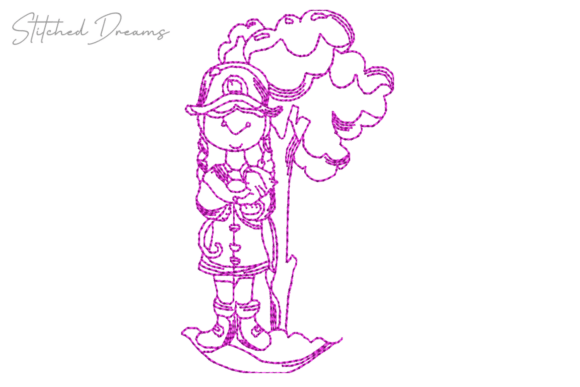
Firefighter Embroidery Design
A Craft Fair Designer’s Real-World Review
As someone who’s stitched, sold, and restocked firefighter-themed items at over 30 craft fairs and handmade markets, I opened the Firefighter Embroidery Design file with a mix of hope and healthy skepticism. The title alone—Firefighter Embroidery Design—tells me this isn’t a novelty or cartoon motif. It’s positioned as bold, heroic, and intentional. That’s promising. In booth settings, where shoppers glance for under three seconds, “bold and heroic” translates directly to stopping power. This design doesn’t whisper—it salutes.
First Impression: Heroic, Not Cutesy—And That’s Its Strength
This isn’t a smiling cartoon fireman holding a kitten. Based on the description—“bold and heroic design”—I expected clean lines, confident proportions, and visual weight. That impression holds up. It reads as modern-heroic: think strong silhouette, purposeful detail (helmet texture, gear suggestion, upright posture), and balanced negative space. It avoids farmhouse clichés, skips over festive tropes, and lands squarely in the premium handmade product lane—ideal for boutique makers and Etsy sellers building trust through craftsmanship.
Where It Shines On Craft Fair Products
Tote bags: A standout. Centered on a natural canvas or heavyweight cotton tote, the Firefighter Embroidery Design reads clearly from six feet away. Its vertical composition anchors the bag without overwhelming it—especially when paired with subtle thread contrast (e.g., navy thread on tan canvas).
Aprons and tea towel embroidery: Works beautifully on both. On an apron bib, it conveys professionalism and pride—perfect for fire department gift shops or local first-responder appreciation events. On a linen tea towel, it adds quiet dignity without looking clinical. Just avoid ultra-textured terry cloth; stitch definition suffers.
Embroidered patches and caps: Here’s the nuance: this design scales well *down* to 3.5”, but tiny details (like badge lines or helmet visor shading) may blur on curved cap surfaces. For patches, use tear-away stabilizer and test hoop placement—center front works best. As a cap design, it’s strongest on structured, light-colored caps with flat crowns.
Pillows, pouches, and market bags: Excellent focal point for small-shop products. On a 12” pillow cover, it feels intentional—not busy. On a drawstring fabric pouch, it gives instant identity. For booth displays, I’d mount one on a mini iron-on patch sample and another on a folded tea towel—both scream “handmade quality” at a glance.
What Makes It Sell—And What Requires Care
The Firefighter Embroidery Design succeeds because it’s instantly legible, emotionally resonant, and commercially versatile. Customers recognize its meaning immediately—no decoding needed. That clarity is gold at craft fairs, where hesitation kills sales.
But here’s where experience kicks in: stitch density matters. “Detailed” in the description likely means moderate-to-high fill areas—especially in the helmet or coat. On dark fabric, use bright white or reflective thread for visibility. On thick fabrics like duck canvas, add medium-weight cut-away stabilizer underneath. And never skip the scrap test: run it on your exact fabric + stabilizer combo before batch-producing embroidered patches or aprons.
Also note: if the design includes small lettering (e.g., “Brave” or “FD”), confirm readability at 2.75”. Tiny text loses impact—and can fray—on textured towels or curved surfaces. When in doubt, simplify or omit.
Photography, Listings, and Online Appeal
This design photographs exceptionally well. Its contrast, structure, and narrative make it ideal for printable mockups—think flat-lay shots with gloves, a vintage fire alarm, or a coffee mug. For Etsy sellers, pair it with lifestyle images: a firefighter’s spouse wearing the embroidered tote, or a child’s backpack with the patch visible. That emotional context boosts conversion far more than a plain white background.
It also supports brand consistency. Whether you’re selling fire-department merch, first-responder gifts, or community appreciation bundles, the Firefighter Embroidery Design reinforces sincerity—not gimmickry. That builds repeat buyers and word-of-mouth referrals.
Practical Designer Notes Before You Stitch
- Test the embroidery file on scrap fabric—same weight, same dye lot, same stabilizer—as your production run.
- Check thread contrast early: black thread on charcoal fabric vanishes. Try metallic silver or safety-yellow for pop.
- Review spacing between elements. Tight gaps (e.g., between helmet and jawline) may merge on low-tension machines.
- Confirm hoop size compatibility. If it requires a 5x7 hoop minimum, plan your product dimensions accordingly—no last-minute resizing.
- Inspect stitch density in fill areas. Dense sections heat up fast; slow your machine speed by 15% if needed.
- Use the right stabilizer: cut-away for stretchy knits, tear-away for stable wovens, and fusible for lightweight linens.
- Create at least one real mockup—not just digital. Hold it in natural light. Does it hold up?
- Compare fabric colors side-by-side. A “navy” thread can look slate-gray on indigo denim.
- Verify commercial licensing before selling finished products. Since this is listed under Freebies, double-check usage rights—especially for resale of physical handmade product.
Final Verdict: A High-Value Craft Fair Staple
The Firefighter Embroidery Design isn’t just another machine embroidery design. It’s a storytelling tool—one that elevates a simple tote into a tribute, transforms a tea towel into a keepsake, and turns a cap into a conversation starter. It performs across categories, photographs with integrity, and carries emotional weight without leaning on sentimentality.
For the Etsy seller refreshing their shop ahead of Fire Prevention Week, the small shop owner prepping for a holiday craft fair, or the embroidery business adding meaningful commercial embroidery options—the Firefighter Embroidery Design earns its place in your core design assets. Just remember: honor the bravery in the design by honoring the details in your process. Test, refine, and stitch with intention. That’s how a digital embroidery file becomes a beloved finished product.