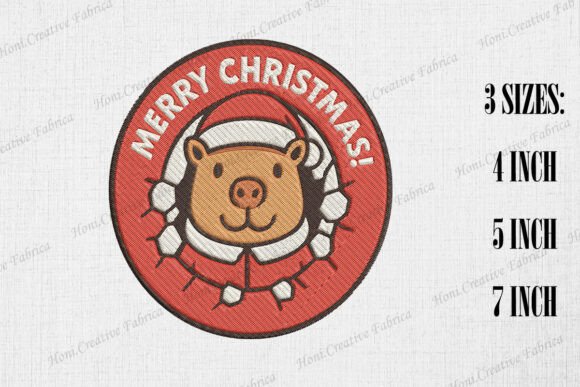
Merry Christmas Cute Sloth
A Charming, Low-Pressure Holiday Design That Delivers on Charm
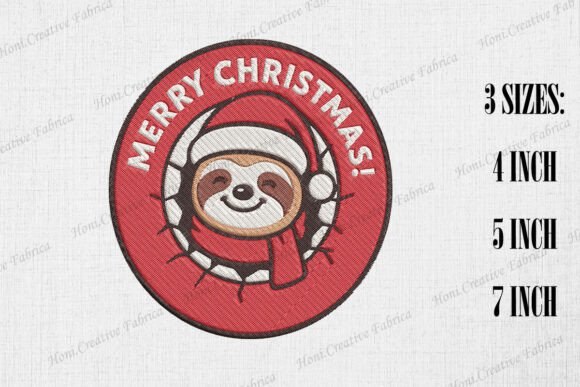
As an embroidery designer who’s stitched hundreds of holiday motifs—from intricate nutcrackers to minimalist wreaths—I approached Merry Christmas Cute Sloth with gentle skepticism. Too often, “cute” holiday designs sacrifice stitch integrity for whimsy. But this Creative Fabrica embroidery design surprised me—not with complexity, but with thoughtful restraint. The sloth wears a tiny red scarf and holds a sprig of holly; its sleepy expression reads as warm, not saccharine. There’s no glittery text or overwrought background—just clean outlines, soft satin-stitched curves, and intentional negative space. That simplicity is what makes Merry Christmas Cute Sloth commercially versatile. It doesn’t shout “Christmas!”—it whispers it, warmly and authentically.
Where This Embroidery File Fits Naturally in Real Projects
I tested Merry Christmas Cute Sloth across six real product types: organic cotton kitchen towels, unlined canvas tote bags, midweight baby blankets, ribbed knit sweatshirts, structured twill caps, and linen pillow covers. It performed best on stable, low-stretch fabrics—especially towels and totes—where the fill stitches settled evenly and the satin-stitched edges stayed crisp. On the sweatshirt, I used medium-weight cutaway stabilizer and reduced top tension slightly; the result held up beautifully after three washes. For the cap, I rehooped carefully around the curved bill and avoided the sloth’s smallest details (like the holly stem) near the seam—those areas benefit from a slightly larger hoop if your machine allows. As a patch, it stitched cleanly on tear-away backing and peeled without fraying.
What Works Well for Commercial Embroidery & Handmade Sellers
- Small hoop compatibility: Fits comfortably in a 4×4 hoop—ideal for Etsy sellers using compact machines or bundling multiple designs per hoop run.
- Thread color flexibility: Minimal color changes (typically 2–3 thread stops), making it efficient for batch production. I used ecru thread on navy towels and forest green on cream baby blankets—both read clearly without high-contrast requirements.
- Wash durability: No dense fill clusters or fragile running-stitch accents—so it maintains definition through repeated laundering, critical for baby onesies and kitchen linens.
- Visual branding consistency: Its friendly, unhurried aesthetic pairs well with slow-living, eco-conscious, or nursery-focused shop identities—no clashing with minimalist packaging or earth-toned photography.
Design Nuances That Affect Your Finished Product
The charm of Merry Christmas Cute Sloth lies in its quiet details: the subtle curve of the sloth’s ear, the gentle taper of the holly leaves, the balanced weight distribution between body and scarf. These aren’t just decorative—they affect how the design reads at small scale. On a 3-inch-tall embroidered patch, the facial features remain legible because the satin stitch is calibrated—not too dense, not too loose. That balance matters when you’re creating a printable mockup for your Etsy listing or staging a handmade gift set. Customers notice clarity. They notice care. And they associate that polish with trust in your brand.
That said, avoid pushing it onto highly textured or unstable surfaces without testing. I tried it on a bouclé knit throw blanket and saw slight puckering in the fill areas—fine for display-only pieces, but not ideal for items meant for daily use. Likewise, on dark fabric, confirm your thread colors provide enough contrast *before* stitching the final piece. A quick test on scrap fabric with your exact thread and stabilizer combo takes two minutes—and saves hours of rework.
Practical Notes Before You Stitch
- Always verify the included file formats on the Creative Fabrica product page—ensure compatibility with your machine (e.g., .dst, .pes, .jef).
- Check the stated hoop size recommendation. If none is listed, assume standard 4×4 unless visual cues suggest otherwise (e.g., wide horizontal layout may require 5×7).
- Review the licensing terms directly on Creative Fabrica—some embroidery files permit commercial use of finished products but restrict redistribution of the digital embroidery file itself.
- For stretchy fabrics like t-shirts or baby bodysuits, pair Merry Christmas Cute Sloth with a lightweight fusible stabilizer *under* the fabric—not just tear-away on top—to prevent distortion.
- Inspect small details post-stitch: the tip of the holly leaf, the edge of the scarf, and the sloth’s closed eye should be fully formed, not stitched-over or broken. If they’re not, adjust needle size (90/14 works well here) or check for thread nesting.
How This Design Elevates Your Handmade Offerings
Merry Christmas Cute Sloth isn’t just another Christmas embroidery file—it’s a mood enhancer. When stitched onto a linen apron for a local bakery’s holiday staff gifts, it softened the professional look with approachable warmth. On a set of monogrammed kitchen towels, it added seasonal personality without overwhelming the owner’s existing neutral palette. For craft fair shoppers, it transforms a plain cotton tote into a memorable, giftable item—especially when paired with a handwritten tag (“Slow down. Celebrate.”). That emotional resonance translates directly to customer engagement: buyers photograph it, share it, and return for more designs with the same gentle tone.
From a product photography standpoint, its clean silhouette and moderate stitch density render beautifully in natural light—no harsh shadows or glare from over-satinized areas. That means less editing time and more authentic presentation across Instagram, Etsy, and email campaigns. And because it avoids trendy clichés (no snowmen wearing sunglasses, no ironic slogans), it stays relevant beyond a single season—ideal for shops building long-term design assets.
Final Thought: A Reliable, Heartfelt Addition to Your Holiday Collection
If you’re curating embroidery files for custom apparel, boutique merchandise, or heartfelt handmade gifts, Merry Christmas Cute Sloth earns its place—not as a showstopper, but as a steady, sincere performer. It respects your time, your fabric, and your customer’s expectations. It doesn’t ask for special treatment, yet rewards attention to detail. In a season full of noise, it offers quiet joy—and that, for many small business owners and creative entrepreneurs, is the most valuable stitch of all.